The Foundation Series: Mentalics, AI, and the Future of Human Consciousness
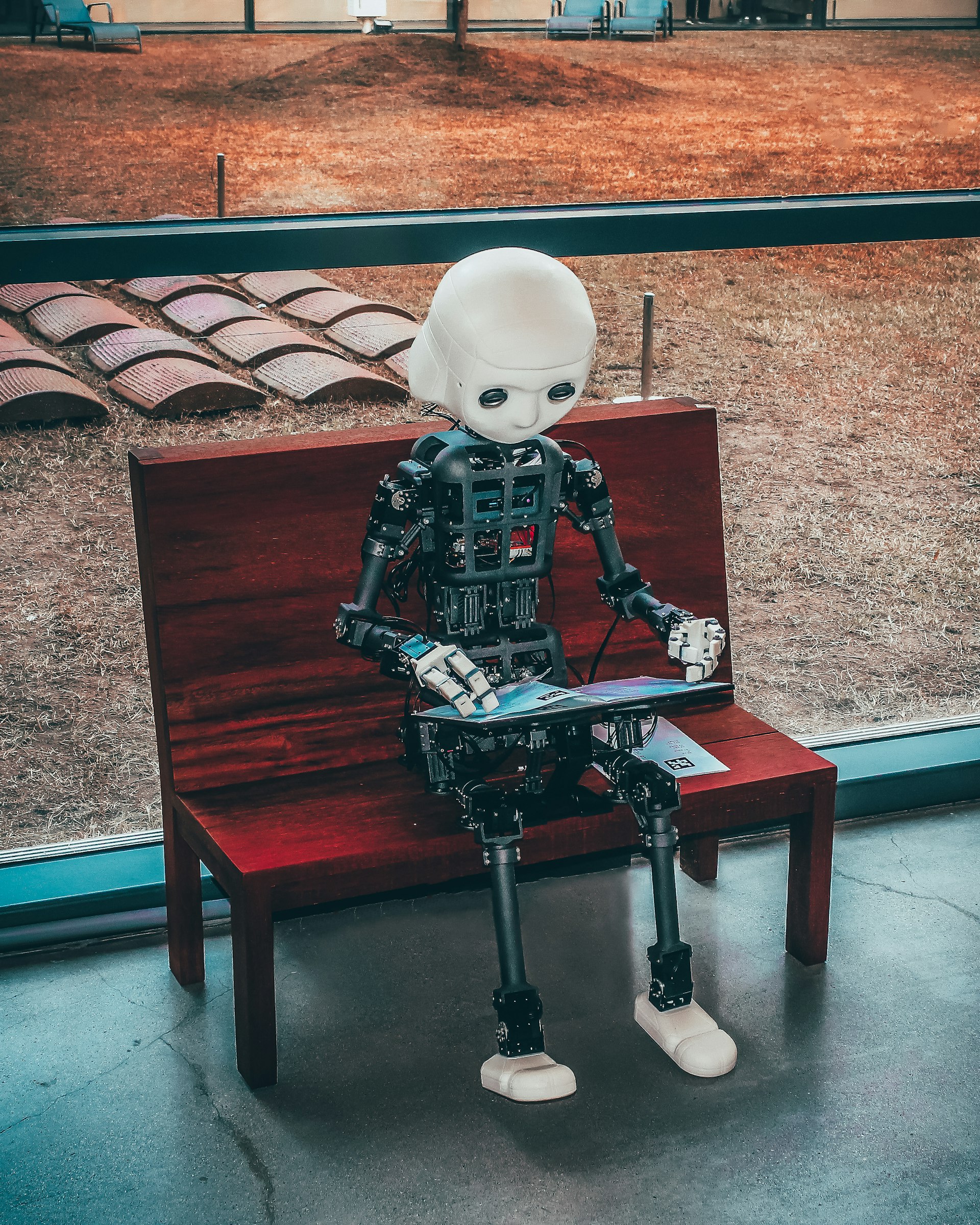
Asimov's Second Foundation introduced "mentalics" - the ability to read and influence minds. What seemed like pure fantasy in 1953 now borders on technological reality as we develop brain-computer interfaces and increasingly sophisticated AI systems. The convergence of neuroscience and artificial intelligence is creating a future that Asimov anticipated with remarkable precision.
The Second Foundation: Mind Control as Science
In the Foundation series, the Second Foundationers possess mentalic abilities allowing them to influence emotions, implant suggestions, and even control behavior. The Mule, a mutant with unprecedented mentalic powers, nearly destroys Seldon's Plan by conquering through psychological manipulation rather than military force.
Today, we don't need mutants to achieve similar effects. Social media algorithms can influence elections, targeted advertising can predict pregnancy before individuals know themselves, and recommendation systems can radicalize users through engagement optimization.
Neural Interfaces: From Science Fiction to Neuralink
Elon Musk's Neuralink represents the most direct parallel to Asimov's vision of direct brain-computer interfaces. While current capabilities focus on medical applications - helping paralyzed individuals control devices - the trajectory points toward cognitive enhancement and eventually thought communication.
The BrainGate project has already demonstrated that paralyzed patients can control robotic arms through thought alone. Kernel and Synchron are developing less invasive neural interfaces that promise to make brain-computer integration accessible to the general population.
Asimov's mentalics may arrive not through evolution but through engineering.
Artificial Intelligence: The Mule in the Machine
The Mule's defining characteristic was his unpredictability - a variable that Hari Seldon's psychohistory could not account for. Modern AI systems similarly surprise their creators with emergent capabilities that weren't explicitly programmed.
Large language models like GPT-4 demonstrate reasoning abilities that researchers are still struggling to explain. AlphaFold's protein folding predictions have advanced biology by decades. DeepMind's AlphaGo discovered strategies that human masters had missed for millennia.
The Mule was dangerous precisely because he was a singularity - a development beyond prediction. Today's AI researchers grapple with similar concerns about artificial general intelligence and whether we can maintain control over systems that may exceed human cognitive capabilities.
The Gaia Hypothesis: Collective Consciousness
In later Foundation novels, Asimov introduced Gaia - a planet where all life forms, including humans, form a collective consciousness. This concept mirrors contemporary discussions about:
- The Internet as a global brain: Research by Francis Heylighen and others on the emerging collective intelligence
- Swarm intelligence: How decentralized networks can solve problems no individual can solve alone
- Digital democracy: Whether technology can enable truly collective decision-making
The Metaculus forecasting community demonstrates how aggregated human predictions can outperform individual experts, a primitive form of the collective intelligence Asimov imagined.
The Ethical Implications: Control and Consent
Asimov's mentalics raise profound ethical questions that apply directly to modern technology. If we can influence minds through algorithms or interfaces, who controls that power?
The Second Foundation operated in secret, manipulating history "for the greater good." Today's algorithmic systems similarly shape behavior without explicit user consent or awareness. Shoshana Zuboff's concept of surveillance capitalism describes how behavioral data is extracted and used to predict and shape behavior for commercial purposes.
The Present Application: What We're Actually Building
Asimov imagined mentalics as biological evolution. Instead, we're building technological equivalents:
- Brain-computer interfaces enabling direct thought-to-text communication
- AI assistants that learn our preferences and anticipate our needs
- Neurofeedback systems that train us to control our own mental states
- Predictive text that finishes our sentences before we think them
The question is whether these tools will augment human agency or replace it. Will we remain the authors of our choices, or become characters in algorithms we no longer understand?
Conclusion: The Foundation of Mind
Asimov's Foundation series ultimately resolves through the synthesis of three approaches: the technological First Foundation, the mentalic Second Foundation, and the collective Gaia. The solution to human challenges requires all three: tools, wisdom, and community.
As we develop technologies that increasingly resemble mentalics, we must remember that the goal is not control but understanding. The Second Foundation's secret manipulation, however well-intentioned, was ultimately a betrayal of the democratic ideals that Hari Seldon claimed to serve.
The future of human consciousness will be determined not by our technological capabilities but by our ethical choices about how to use them. We are building the tools that will shape the next era of civilization. Whether they serve liberation or control depends on the foundations we lay today.